#365: I bring you the future
Microsoft fires the starting gun on next gen (sorta).

Apparently GDC happened this week. Did anyone really notice? Normally at this time of year the headlines are full of cool stories. Write-ups of sessions diving deep into the making of a raft of indie bangers and triple-A big hitters; big interviews with big names; breaking news of apparently very exciting technical advancements for me to somehow pretend I understand. This year? Fuck all, really. The only meaningful GDC-related chatter I’ve seen this week is everyone pointing and laughing at Google’s rickety AI game generator, and a fiery IGF acceptance speech from Titanium Court developer AP Thompson. It’s almost as if when you host a prohibitively expensive convention in a deeply unsafe country, serving an industry where everyone’s either unemployed or skint, covered by a media sector that barely exists anymore... well, you know. GDC used to be so important, so vital. I knew people who talked about it the way I used to talk about E3. Now it feels like it barely exists.
That might seem like a strange thing to say when GDC has just yielded the first official details on the next Xbox, after Microsoft shoved hardware VP Jason Ronald on stage to talk about a device, codenamed Project Helix, that will be available to developers early next year. You have to sympathise with Ronald here, and not just because he has been forced to go through life without a functioning surname. Getting people excited about a new Xbox is one of the hardest gigs in modern gaming — particularly when your thunder’s already been stolen by your new boss, Asha Sharma, who upended decades of game-industry hype-circuit tradition by just... tweeting it out a few days before Ronald took the stage — and becomes even harder when we consider the specifics of what he actually had to work with.
The new Xbox sounds, I am afraid but not terribly surprised, a bit boring. It is, as has been rumoured and suspected for a while, essentially a PC — though as we will discover later on, just how much of a PC it will actually be is the million-dollar question here. While Ronald danced around the specifics a bit at GDC, his claims that Helix will “play your Xbox and PC games” as part of a wider focus on "making the Xbox experience consistent across screens" has been widely taken as tacit confirmation of earlier reporting that the device will run on a somewhat debloated version of Windows, with a console-style frontend. The interface, dubbed “Xbox mode”, debuted on the Rog Ally X handhelds and will be rolling out to the wider PC market in the coming months, an entirely sensible initiative that makes Helix feel even less like a console and even more like a PC. You could argue that’s an increasingly redundant distinction in this device-agnostic age of ours, but I think it still matters — mostly because it makes this thing that much harder to get excited about.
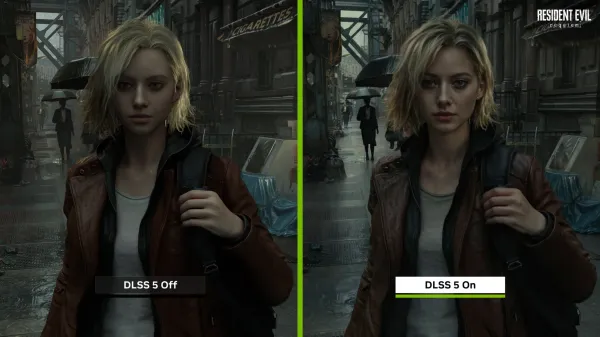
This isn't Microsoft's fault, mind you (gosh, there's a rare sentiment). Rather, it's a reflection of where we are these days. New hardware, whether for games or some other purpose, is no longer about some profound generational leap, but merely getting a slightly more performant version of a thing we already have. Yes, sure, Helix will be better at the stuff that seems to matter most these days. It will trace a better ray. It will more intelligently upscale pixels. But if there’s one thing the unleashing of Project Helix makes abundantly clear, it’s that the days of us being excited by the potential of new hardware are well and truly over.
Putting a PC under a TV is a good idea, to be clear. It was when Valve announced Steam Machine, it still is now, and I can certainly see why it appeals to Microsoft. It means working with Windows, something with which it is naturally far more comfortable than it has ever been with consoles. It will reduce, and perhaps outright remove, the need for platform-specific deal-making, which will definitely make Microsoft’s life easier in an age where indies in particular see progressively less value in shipping games on Xbox. If we are able to assume that Helix running on Windows means a Windows-esque level of openness as a platform, it unlocks lots of cool possibilities: thirdparty stores, mods, emulation. On that last point, Ronald’s reference to “new ways to play some of the most iconic games from our past” — coming this year as part of Xbox’s 25th anniversary celebrations — seems to imply some official form of PC emulation for the Xbox back catalogue. That would definitely be pretty cool, though my inner cynic suspects there are a lot of unspoken asterisks in that statement, and the feature won't be as exciting in reality as it currently is in my head.
Microsoft and its defenders — who by this point comprise a couple of copium-peddling journalists, and an ever-dwindling army of Forum Guys who have spent the last 20 years making Xbox a core part of their personality, and simply can't back out now — will tell you this is all very smart, actually. They will point to Matthew Ball’s latest enormo-Powerpoint, which I have spent the last few weeks desperately trying not to write about because it makes me very cross, and its revelation that PC gaming is one of the game industry’s few true growth areas. Microsoft has been talking for a while now about meeting players where they are. This is a decent way of doing that, particularly now it has sent 'This is an Xbox' to a nice farm in the countryside where it can run around with all the other terrible marketing campaigns. All fair enough, in a way. I can certainly see the appeal in this new direction for Xbox.
But! But, but, but. Surely there's no way this is an actual PC? That would mean cheaper new games and free online play, and I can't see an Xbox division that's already incapable of hitting its growth targets willingly surrendering that revenue. If Helix was an actual PC, you could buy one, install Steam on it and never give Microsoft another penny. It would mean Microsoft, which has spent a quarter-century trying and mostly failing to compete with Nintendo and Sony, would be putting itself in direct competition with the entire PC market, Valve included, in addition to its old console rivals. They wouldn't do all that, would they? Surely? I don't know! I hope they do! Unfortunately, until Microsoft shares some more details on this thing — i.e. Sharma logs onto Twitter again with a twinkle in her eye and a story in her pocket — all we can do is speculate.
Hmm. I take back what I said earlier: turns out Helix is pretty interesting after all. I'm not sure it's interesting in a good way, admittedly, but in this boring era of incremental hardware upgrades — a TFLOP here, a CUDA core there — I suppose I’ll take what I can get.
There you go. No time for a round-up today as the youngest’s off school — a surprise Inset Day, which I’m sure will delight those who read last week’s subscriber exclusive — and the Switch can only babysit him for so long. An afternoon It Takes Two session awaits.
If you’ve enjoyed today’s edition, perhaps you’d consider helping keep the wolf from the door at Hit Points Towers with a paid subscription? Just £4 a month gets you three exclusive posts per month, entrance to the heavenly HP Discord, access to the entire archive of Hit Points nonsense, and my eternal adoration. Plus, of course, the uniquely warm and fuzzy feeling of knowing that you’re paying to support good (?) work, and ensuring it can continue for many years to come. There’s a tip jar below, too, if you’re not into the whole subscription thing. Thank you.
Right, better go. Congrats to the two of you who saw today's headline and thought, ‘good god, did he just reference Breakage #4?’ Yes. Yes he did. Have a great weekend!