#402: Vibe shift
Thoughts on a big, and very annoying, week for genAI in games.

It’s been a big, big week for all those noisy advocates of generative AI. It is not just about the news, though there’s certainly been plenty of that; the real change has been in the tone of the discussion, which has markedly shifted away from the sort of airy LinkedIn-guy chat about the technology’s future potential that has thusfar dominated the discourse. The future, it seems, is now — and it is brash. We’re fuckin’ doing this thing, losers. Deal with it.
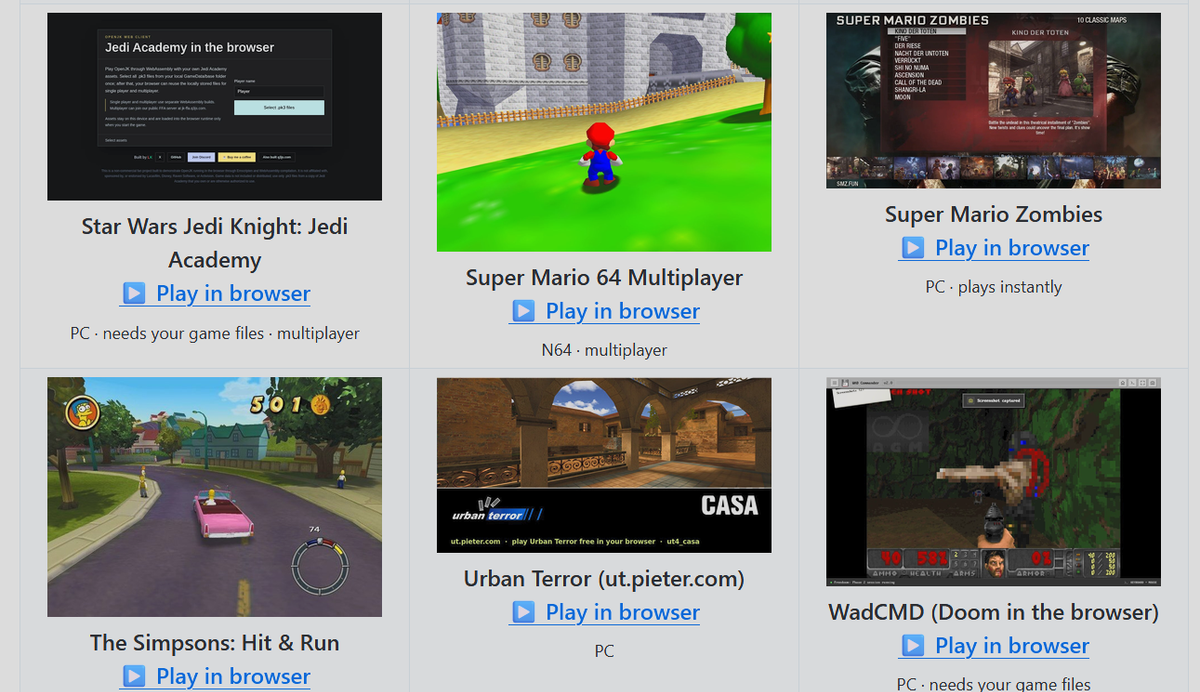
The catalyst for it all, as this excellent Lewis Parker story at Kotaku explains, was the release late last month of a new Claude update, Opus 5.5. It has simply blown the bloody doors off the game industry’s vault of secrets, its ability to speedily decompile and recompile source code leading to a stampede of new projects from hobbyist ‘vibe coders’. You want GTAV, or a multiplayer version of Super Mario 64, playable in a web browser? A Big Walk guy in Elden Ring? Skate 3 mashed up with Modern Warfare 2, running on a Mac? All yours, at least until the DMCA takedowns show up, which they have this week in droves. The PS5 has been jailbroken, and scenesters are burning through tokens at astonishing rates to try and get the console fully emulated on PC before GTAVI arrives next month. Nothing, it seems, is beyond the realms of possibility now AI is this capable, and this deeply involved. And nothing, certainly — no source code, no IP, no copyright — is safe.
You might imagine the higher-ups at the planet’s biggest game companies would be watching this stuff unfurl before their eyes, considering the implications of it for their businesses’ long-term future, and promptly shitting themselves. (At the very least, you’d expect, they would be muttering nervously about this apparently unforeseen change in the leopards’ diet.) Yet some of our industry’s major players see all this not as an existential threat to their businesses, but as an opportunity — as a chance to finally push genAI into gaming’s bigtime. Among them is Xbox boss Asha Sharma, who this week unveiled a rather vague, yet still thoroughly irritating internal vibe-coding operation dubbed Xbox Labs. And then, with depressing inevitability, there was Tim Sweeney. The Epic boss has been loudly and shamelessly boosting AI for months now, and clearly believes it's time for him to make his move. “We have a huge pivot underway here at Epic,” he honked on not-Twitter, “moving developers around to retool for maximum AI acceleration.”
Easy as it is to laugh at a man who can hit Submit on a post containing the phrase ‘maximum AI acceleration’ without cringing himself inside out, I almost respect Sweeney for finally putting his money where his mouth has been all this time. His post-shame era is already a few years old, and this week he has at last dragged his company, and its remaining staff, along with him. “Programming is hard,” begins an announcement post on Epic’s website. “So, instead of doing that, we vibe[-]coded a new Epic Games Launcher that’s way faster and more responsive than the current one, and has a new look.” Mmm. My thoughts are with Epic’s army of hard-working and clearly super-talented programmers, who were just thrown rather forcefully under a bus so their boss could go clout-farming on socials. I hope they allowed themselves a smile when the launcher’s main USP — being a few seconds faster to boot from a cold start than Steam — was eradicated 24 hours later by a Steam client update that made Valve’s storefront zippier out of the blocks than ever, beating Epic’s update by a few tenths of a second.
Sweeney’s main move, however, concerns the development of an unannounced Epic game, an online shooter starring Marvel and Star Wars characters, that was delayed indefinitely this week. An edict from on high has decreed that development will henceforth be “AI-first”; that there will be no more hand-written code, with Claude handling all programming; and that, most ominously, all in-game assets must now be “generated with full AI workflows.”
Needless to say, this crosses a line — a Rubicon that has hitherto confined the fuss and discourse around the usage of genAI in games to the intricacies of Steam disclosure, and the moral implications of developers employing LLM assistance for coding tasks etc. No longer: this is really happening. The game’s development team are reportedly downcast; the public response, at least in core-gaming communities, has been little short of furious. Needless to say, I get it, and am largely of the same mind. But I also think this is a good thing. I’m genuinely glad it’s happening.
Quite simply, this debate needs a test case. We need a big company to stick its head above the parapet and say, yeah, we’re all in. Not just using ChatGPT for placeholder dialogue or artwork, or using Claude to speed up some dreary-but-essential engineering task, but basically saying, yes, we are appointing a language model as our game director, and every department lead. A full-on, all-out AI game, from one of our industry’s major players, is the only way we are ever going to settle the argument; the only way to find out once and for all whether the strength of opposition to this technology being used to make games is actually meaningful enough to put a stop to it, or is just the witterings of a noisy minority too insignificant to dent the bottom line.
If you doubt whether one game can really make this much of a difference, consider the precedent. Take Axie Infinity, which for a brief window in the Covid days was the poster child for ‘play-to-earn’, a model that crypto weirdos, blockchain nobbers and a dispiriting number of game-industry people who really ought to know better loudly trumpeted as the future of games; it turned out to be a pyramid scheme, faded rapidly and silently from view, and took the concept of play-to-earn with it. Remember, too, when executives all over the industry were excitedly talking up our shared digital future in the metaverse — and how Horizon Worlds failed to find an audience despite Meta’s billions, and the concept died a quiet death. If those aren’t close enough to home for you, consider Concord, a game whose failure was so fast, so costly and so deeply embarrassing that it killed Sony’s entire live-service strategy overnight.
This is what Tim Sweeney, bless his cottons, is dragging Epic Games into by the collar, and I wonder whether he understands just how much of a risk he’s taking — not just for himself or his company, but the game industry at large. Whether this Disney game of his turns out to be AI’s ultimate proof of concept, or merely its cautionary tale, remains to be seen, but I’d be lying if I said I wasn’t looking forward to finding out. Cross your fingers, eh? And maybe fasten your seatbelts. It is going to be quite the ride.