#397: Noxious fumes
Why Capcom has the answer to the game industry's gas problem.

The cover story in the latest issue of Edge is a cracker. It’s classic Edge, a rare sight of the mag’s purest essence, a sidestep away from the usual hype-circuit stuff to run the rule over a vital topic: in this case, the ever-widening belief that the game industry is on the brink of a crash that will make Atari’s early-80s collapse look like the stub of a toe. The cover itself is punchy and brash; the feature is, naturally, beautifully designed. The copy is a tremendous access flex, roping in a gigantic cast of industry luminaries — Harvey Smith, Raph Koster, Shawn Layden and, regrettably, Tim Sweeney, to name but a few — to try first to make sense of how the game industry got itself into this ever-thickening existential pickle, and then to consider how on earth it’s going to get itself out of it.
Naturally the first part of that equation is a more straightforward solve than the, erm, unpickling (a task which certainly isn’t helped by Sweeney, a man who presumably wore his hot dog suit for the interview, talking up Unreal Engine 6’s everything-is-Fortnite ethos as the industry’s yellow-brick road). Koster classily refutes the nodding dogs proclaiming AI as the answer to everything by invoking Myhrvold’s Law, a new one on me apparently coined by Microsoft’s first CTO Nathan Myhrvold. “Software is a gas — it expands to fill whatever computer you have,” Koster says. “AI is just a computer getting bigger, and so the gas will keep filling it.” Lovely stuff, stealing that. The feature closes with an acknowledgement that the game industry’s malaise is merely a symptom of a wider sickness, with several interviewees making an earnest pitch for the overthrow of capitalism. Much as I sympathise with that — a paid subscriber recently cancelled due to an oversupply of “activist content”, and even I, thin-skinned and defensive as I am, had to admit he had a point — it seems a bit, y’know, ambitious. If a solution is to be found to all this, it probably has to start smaller than that. These things begin a little closer to home.
As such I find in Shawn Layden something of a kindred spirit, obsessed as he is with the triple-A industry reining in development costs — something that game companies can simply decide, and in any event will pretty soon be forced, to do. I am drawn, too, to ASGC’s Amir Satvat, who rightly points to Japan as evidence that it is still perfectly possible, in this environment, to make successful games in a financially sustainable way.
I have been thinking about both these things for a while now. Japan’s game industry — like Japan itself, in fact — has always been a sort of mirror universe of the west, but it has never been more so than in the 2020s, which has seen the western industry doing increasingly desperate last-days-of-Rome things while Nintendo cranks out more Switch 2 exclusives in a year than Sony has managed all decade, and while the likes of Capcom knock out multiple hits a year and post record profits quarter after quarter. In a way it seems odd that we should all be rending our garments like this, asking how on earth we’re going to get ourselves out of this mess, when the answer’s right in front of us, and indeed has been there since the 90s. Just copy Japan innit.
A few weeks ago Hit Points chum Lewis Gordon got in touch to ask for an interview for a piece about Capcom he was working on for The Ringer. Unfortunately it was the last week of the school holidays, and in my desperate crawl towards the finish line I missed his reply about interview timings. Sorry Lewis! (The story, which is very good despite or perhaps because of my absence from it, is here.) Reading it again in the context of that Edge cover story, it’s even clearer to me that Japan, and Capcom in particular, is the model the west should be looking to follow, not least because it’s a model many western companies successfully employed for years. They are doing everything we are not: keeping tentpole series like Resi and Monster Hunter active — rather that spending a decade on a single game — then using their success to fund groovy experiments like Pragmata; retaining, often for decades, staff who know where the bodies are buried; and crucially, more than anything else, keeping budgets firmly in check.
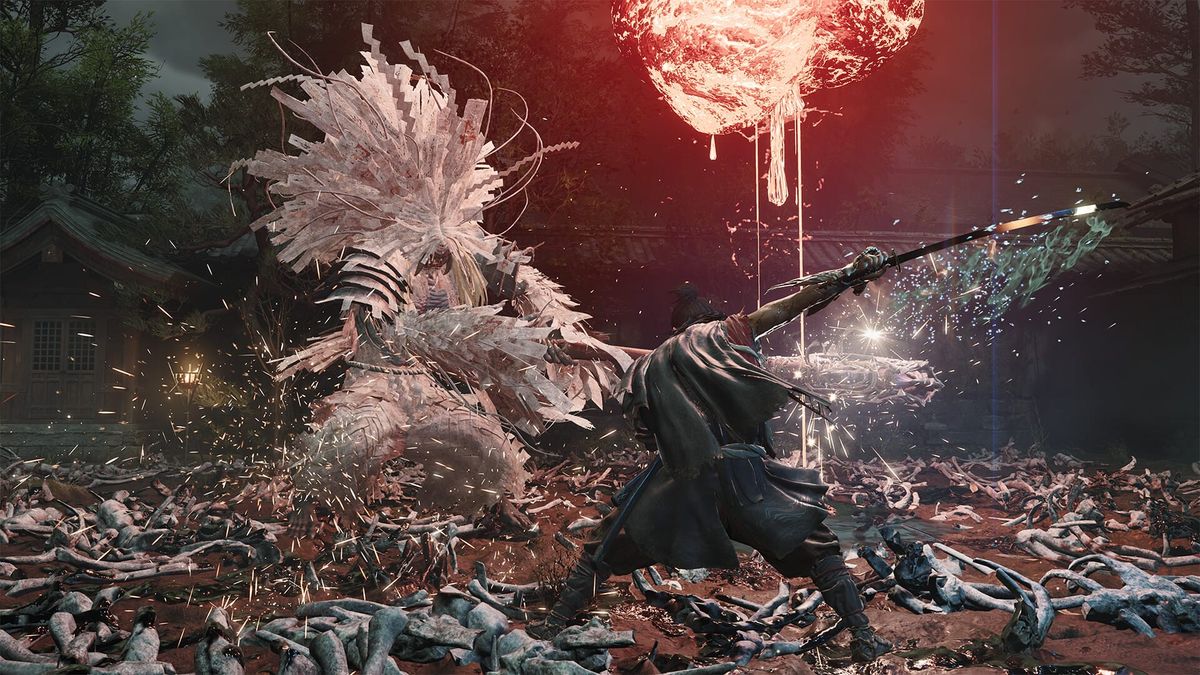
Lately I’ve been playing Onimusha: Way Of The Sword, the latest game off Capcom’s remarkable conveyor belt. There’s a lot to love about it. It has the best, most satisfying and spectacular parry system of any game I’ve ever played (though I agree with Jank that this means videogame parries have now peaked, been ‘completed’ if you like, and we should therefore stop stuffing them into every single game). The English localisation is brilliant. Combat is stylish and flashy. It is handsome where it counts — character models, animations, the best-in-class boss battles — but merely serviceable elsewhere, the reused assets and invisible walls that proliferate on the rather bland streets of East Kyoto making it abundantly clear where the money has really been spent, and where it hasn’t. Onimusha will not win any technical awards, but it isn’t trying to; it is still the most fun I’ve had with a new release all year, and my enjoyment has been entirely undimmed by the occasional ropey wall texture or NPC fizzog.
Japan’s industry has some in-built advantages over the west, sure. Salaries are lower (particularly, as Satvat points out in that Edge piece, at executive level). Workers are culturally less mobile, so tend to stick around, and through legislation are much harder to lay off. We couldn’t copy that stuff if we wanted to. But if the western triple-A scene takes one thing from the likes of Capcom it’s that you don’t need to spend $300m to have a good time. As Koster might have it, you’ve got to seal up some vents before you start pumping the gas in. If you let it spread unfettered, you’re probably going to die.
MORE!
- Tim Sweeney thinks the future of games is everything being Fortnite, so it’s no surprise to see the Roblox bods saying the same. Last week's Roblox Developers Conference yielded news of an initiative called Roblox Anywhere, which will enable the platform’s army of exploited workers to turn their creations into standalone apps. Does it mean we’ll soon see the likes of [googles ‘successful Roblox games’] Grow A Garden and TTK on Steam etc? Not immediately, apparently, but a Roblox rep told PC Gamer it’s definitely the plan. Big stuff, this, though not sure it leads us anywhere good. The industry’s current discoverability woes are going to look like a picnic. Be afraid!
- Also big: the EU Commission’s proposed EU Kids Act. While the main targets of the leglisation are social networks and video platforms — the Commission plans an outright ban for under-13s, and certain restrictions on under-15s — online games are also caught in the net to varying degrees. A clause forbidding games from encouraging excessive usage, or punishing lapsed engagement, seemingly takes stuff like login bonuses and daily streaks off the table, and there’s some timeworn stuff about chat safety, parental controls and microtransactions too. Awkward reading for the Robloxes of the world, sure, but all seems sound enough from a parent’s POV.
- Level-5 CEO Akihiro Hino still loves generative AI, despite lots of folk kicking off over its brazen usage during the publisher’s pre-TGS showcase. “It appears that some people felt uncomfortable about this, so I deeply apologise,” he said, before revealing that he wasn’t really sorry at all. “Thanks to the time created by AI efficiency, creators are now able to dedicate more time to the essence of creation, and I believe the finished products are turning out to a level that will satisfy everyone even more than before.” Sure, sure. Good luck selling them.
- MindsEye developer Build A Rocket Boy has either done another big layoff or closed entirely. This has been in the post for a while, really. Thoughts with all those affected, except that CEO guy who is absolutely off his rocker. Polyarc, developer of charming VR adventure Moss, has also closed its doors, while Hyper Light Drifter maker Heart Machine says it’s facing closure after laying off almost its entire team. Fuck it all.
- Valve unveiled its standalone VR headset Steam Frame this week, and it says a lot that my reaction to its $1100 launch price was, like, huh, thought it’d be way more than that. At that price a VR device seems like a complete non-starter in space year 2026, but I kind of respect Valve for shoving it out there anyway.
- Just when you thought you were over Kickstarter for good, someone goes and announces a Baba Is You board game (and an IRL deckbuilder adaptation of UFO 50 banger Party Time). Yoink.
That will do! Hurrah for Slay The Spire references in headlines. If you enjoyed today's edition, kindly consider a paid subscription; Hit Points exists only because of the kindness and generosity of its small army of fine-smelling backers. You'll find buttons sprinkled through today's edition. If you're not into the whole paid-sub thing — I get it; everyone's doing it these days — you can always buy me a pint or six via the Tip Jar button below.
My hedge trimmer broke last weekend. I borrowed the next-door neighbour’s but the battery ran out halfway through the job, so I ordered myself a new one. It takes two batteries and has a much longer blade and I am ridiculously excited to put it through its paces. Please ensure your weekend contains something much cooler than that, so we can keep the universe in balance. See you next week!