#359: Turn the page
Thoughts on (grits teeth) a very good book.

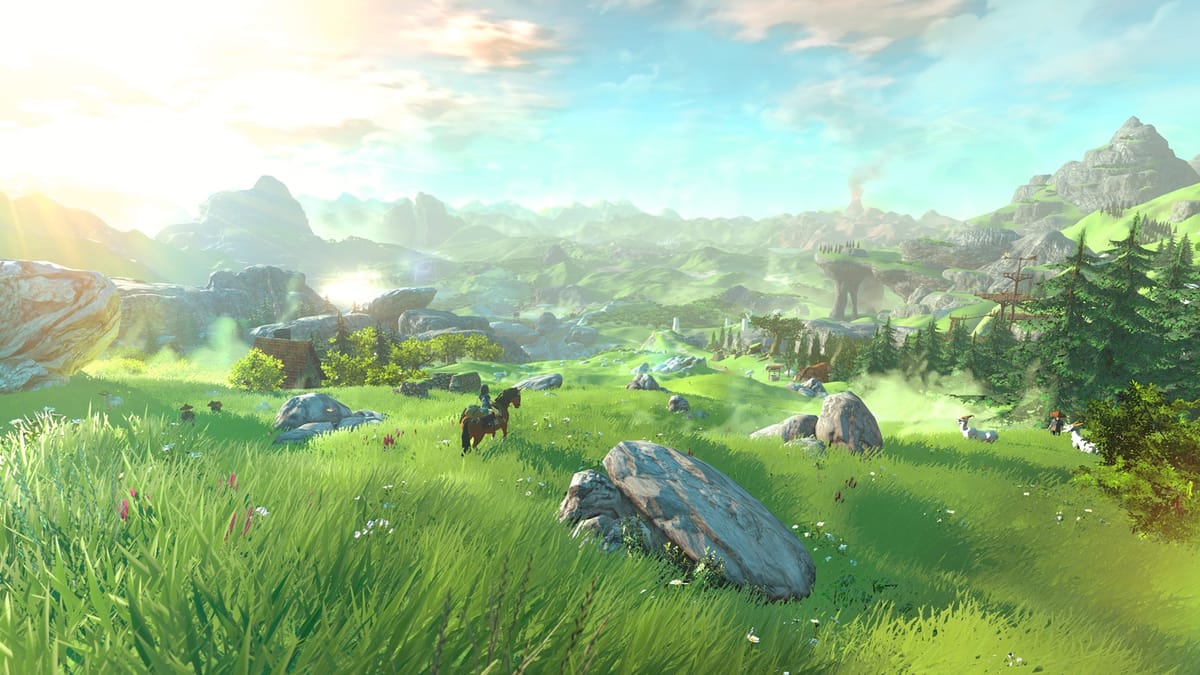
I have spent much of this week in the company of Super Nintendo, the excellent new book by The Guardian games editor (and, in the interests of disclosure, esteemed Hit Points chum) Keza MacDonald. I’ve been looking forward to this for ages, since few working journos understand Nintendo as deeply as Keza, and even fewer have enjoyed the level of access to Nintendo’s staff that her various postings over the years have afforded her. Yet she also shares with all the rest of we Mario-pyjama-wearing idiots a lifelong, unbreakable, childlike love of Nintendo and its work. (Keza and I huddled around a laptop in the lobby of LA’s JW Marriott hotel to watch Nintendo’s E3 Direct in 2014. It yielded a brief first look at what would later become Breath Of The Wild, and as the opening shot faded in we squealed in unison, and got some funny looks from the joylessly hobnobbing suits around us.) I can think of few writers better equipped to tackle a book like this. Her bona fides are beyond reproach.
So, happily, is the book itself, which knits together a deeply researched chronicle of Nintendo’s history, insight from its developers, and Keza’s own memories in an elegant, coherent, and relentlessly engaging way. Hit Points readers will, I am sure, be delighted by the book’s fondness for context; it is not only interested in telling the story of Nintendo, though it does that very well indeed, but also in zooming out a bit, in order to look at things more broadly. Each chapter focuses on a particular series — Mario, Zelda, Smash Bros et al — and uses its subject as a springboard into what it tells us about Nintendo, or about games, or the making, selling or playing of them; sometimes, even, about life itself. The chapter on Labo sets Keza free to talk about the weird, experimental side of Nintendo — the Power Glove and Virtual Boy and whatnot — and how it reflects a company that has always worked unburdened by fears of failure, staying true to its past as a toymaker. Metroid tees up some thoughtful discussion of the game industry’s sexist past (and slightly less sexist present). Animal Crossing, inevitably, invokes Covid lockdowns; not a subject I typically want to read about, but it's handled here with such delicacy and grace that even I, an increasingly barren husk of a man, choked up a couple of times. It even made me want to give New Horizons another shot, though thankfully I soon came to my senses.
One of the promises of the book’s marketing campaign is that even the most hardened of Nintendo fans will learn something new from it, and while that’s certainly true I think it sells it short. It has genuinely changed the way I think about certain games — I feel like I actually understand, and maybe even appreciate Pokémon now, for instance, though if any of you should dare tell that to my eldest I will hunt you down and bop you on the head — and it has deepened my understanding of how Nintendo works and thinks, why it does the things it does.
Much of that comes from an enviable selection of interviews, most of them drawn from across MacDonald’s career, though the highlight is an extensive 2024 sit-down with Shigeru Miyamoto arranged specifically for the book, the fruits of which are woven throughout the pages. Keza’s great advantage here is that she lived in Japan for several years; while she admits she can’t speak the language as well as she used to, she can still understand it, and in interviews this gives her a significant leg-up on the overwhelming majority of western games media, who have to rely on the (usually) robotic work of a translator. She hears things the rest of us don’t — and, on occasion, things she isn’t meant to hear. (If you ever meet Keza in person, I suggest you buy her three drinks — maybe four, to be on the safe side; she is Scottish after all — then ask her to tell you the Kojima story. I am reluctantly sworn never to repeat it, which kills me. It is exquisite.) I, too, have sat with Miyamoto for over an hour, but I came nowhere near to the level of understanding of what he’s actually like, or how he really thinks about his work, that Keza conveys in this book. I am professionally jealous about a lot of this esteemed tome, but this bit in particular takes the biscuit. Furious about it actually. God.
Miyamoto is everywhere in Super Nintendo, as you’d expect him to be. But so is Satoru Iwata, despite him being just about the only senior Nintendo figure Keza never managed to get on the record. Over a decade after his passing Iwata remains every bit as much the spiritual embodiment of Nintendo as Miyamoto, yet one of his greatest contributions to the company’s story, and therefore to this book, is as un-Nintendo as it gets. It is one of the most secretive companies in the game business, and indeed in the world — yet Iwata’s time as president yielded an absolute treasure trove of information on and insight into Nintendo’s inner workings, from his regular columns for his friend (and Earthbound creator) Shigesato Itoi’s website, Hobo Nikkan Itoi Shinbun, to the stellar and sorely missed series of developer interviews, Iwata Asks. More than anything Iwata understood, I think, that it was important that someone wrote all this stuff down. As such I reckon that, were he still around, he’d appreciate this book as much as I do.
MORE!
- Another thing I appreciate about Keza’s book is that it’s saved me devoting yet another top story to live-service guff, because it’s been another brutal week out there in forevergameland. Most of the team at Wildlight Entertainment, developer of Highguard — a hero shooter made by Apex and Overwatch veterans that was the rather mystifying choice for ‘one more thing’ at the end of December’s Game Awards, and released about five minutes ago — has already let go most of its team. Riot Games has cut in half the team behind League Of Legends spin-off fighting game 2XKO less than a month after launch, with some 80 staff affected. And Remedy’s attempt to put itself back together following the failure of FBC Firebreak has seen it appoint as its new CEO a former EA mobile exec and president of a “fantasy sports betting platform”, whatever that is. I’d rather not know. Grim.
The occasional success of a Helldivers 2 or Arc Raiders inevitably dictates that the Tobias-style ‘but it might work for us’ ethos that’s driven the live-service goldrush since the pandemic will continue for a while yet. All the while, evidence keeps mounting up that players don’t really want this stuff anymore — and even if they did, they wouldn’t have time for it because they’re already busy with the incumbents — and that a swing and a miss could cost your studio at best a lot of its staff, and at worst its very soul. Not great! - Ubisoft staff went on strike this week in protest at the publisher’s latest nonsense, including a sweeping restructure and return-to-office mandate. According to the union Solidaires Informatique, over 1,200 workers — largely in France, with some solidarity from Ubisoft Milan — took part in the three-day walkout. Ubisoft pins the figure at an annoyingly specific 538, adding: “Ubisoft's leadership remains committed to maintaining an open and constructive dialogue with employees and employee representatives, in order to support this transformation and to build a stable and clear working framework for everyone.”
- It’s been a difficult week for Discord, after the chat platform announced it would require every user to submit a facial scan to prove their age — something met with understandable rancour given the whopping great big cybersecurity oopsie Discord suffered last year. It’s spent the last few days steadily rowing back on the policy, and now says that in the majority of cases it’ll be able to identify adult users with existing data: “We use age prediction to determine, with high confidence, when a user is an adult." The denizens of the subscriber-exclusive Hit Points Discord can rest easy, I think; we do, after all, have a gardening channel called I Fought The Lawn. No kids in ‘ere, guv.
- A “No ICE In Minnesota” bundle launched on Itch.io this week, offering up over 1,400 games, books, zines and other stuff in exchange for a mere ten bucks. It’ll be on sale for a month, with proceeds funnelled to Immigrant Law Cent[re] Of Minnesota, which “provides free legal representation to low-income immigrants and refugees in Minnesota and North Dakota,” it says here.
- Halfway through February, we have the year’s first indie juggernaut. Mewgenics, the long-in-development cat-battler/breeder from Meat Boy/Isaac bods Edmund McMillen and Tyler Glaiel, recouped its development budget within six hours of launch, and as I type almost 60,000 people are playing it on Steam. This sounds very much like my kind of thing, but chatter about needing 200 hours just to finish it, rising to 500 if you want to see everything the game has to offer, puts me right off. No doubt I’ll buckle at some point; I always, always do.
- Lastly, some stuff I’ve enjoyed this week: ‘I wish videogame culture would take more cues from readers’ at Jank; ‘Can Build A Rocket Boy save itself?’ at GI.biz (some absolutely wild stuff in here, sheesh); the very concept of ShipShaper; Saber’s John Wick; and a very good post about beavers.
There you go! If you’ve read this far, can I safely assume you’ve enjoyed today’s edition? Might I therefore be able to persuade you to support Hit Points financially? After deep consultation with the finance department (i.e. I thought about it for a few mins in the shower yesterday — this is a solo operation, remember) I’ve decided to launch a new special offer, giving you 50% off your first month, and leave it up basically forever.
That’s an initial £2 for at least three additional posts per month; access to the full HP archive; and entrance to the mysterious, wondrous, Narniaesque Hit Points Discord server. Chuck us a sub, eh? Or a tip, perhaps, if you’re not into subscriptions? Have a lovely weekend, either way, and I’ll see you all next time.
(Yes that's a Streets reference in the headline, well done.)